
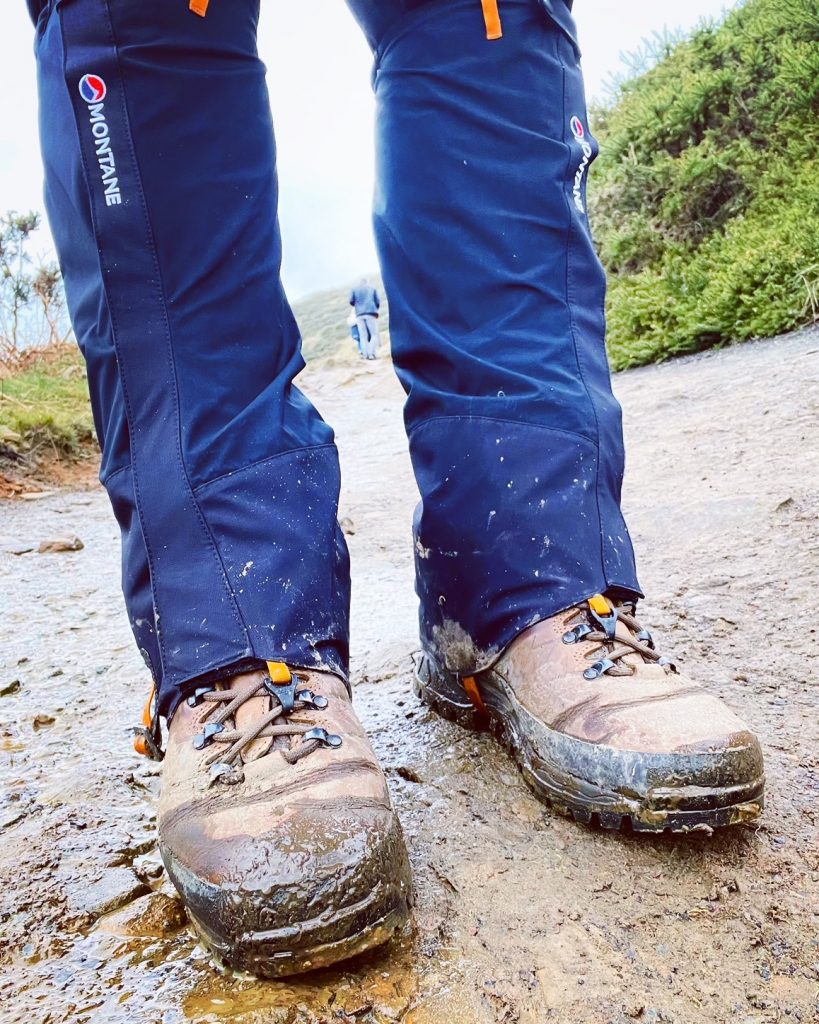
Choosing the Right Footwear
“What footwear should I buy?” is probably one of the first questions anyone asks themselves if they decide they want to start getting outdoors, and it’s an important consideration because, in my most humble of opinions, having decent shoes or boots is absolutely essential.
While trainers may be sufficient for rambling across fields, the moment you start adding hills or mountains to your adventures, you need better shoes. Why? Because shoes and boots that are made for hiking are designed to properly protect and support your feet for the type of terrain you’re likely to be dealing with. Please don’t wear trainers up mountains, especially in the winter; I’ve actually seen young guys wearing gym trainers going up Helvellyn in the snow in the middle of winter and I still shudder when I think about it. Those are the people who end up calling the Moutain Rescue Service because they’ve got themselves into a fine mess. Don’t be one of those people!
Of course, your own personal budget may ultimately limit your options, but if you shop around you’ll find options in every price range.
Unfortunately the current “gorpcore” trend of high street fashion brands adopting outdoor styling means there’s a lot of footwear out there that looks the part, but really isn’t suitable for any kind of actual hiking. Please resist the urge to buy fashion brands just because it “looks cool” – there’s a reason why outdoor footwear is specialised, and it’s not just aesthetics. Outdoor footwear brands like Scarpa, La Sportiva, Meindl, Salomon, Merrell, Lowa, Keen, etc carefully balance performance with considerations like weight, breathability, durability, waterproofing and other features that fashion brands do not.
In terms of functionality and performance, not all boots are equal. Don’t be tempted to just buy the most expensive boots in your local outdoor store, because they may well not necessarily be suited to your actual needs. Those Scarpa Manta Pro GTX boots on the shelf sure do look cool, but if you’re just walking your dog in the Chilterns, they’re total overkill, and are actually going to be somewhat detrimental to you because of their stiff soles that are designed for mountaineering in rocky, icy conditions and not walking. Ideally your local store will have a footwear expert on hand to advise you based on your needs, but this isn’t always the case.
The most important factors when trying on outdoor footwear are protection, comfort, durability, and weight. Think about the following:
Boots or shoes?
There’s a lot of debate about this but at the end of the day it mostly comes down to personal preference. Personally I prefer boots most of the time because I have a slightly dodgy ankle that’s prone to rolling, but I also like the additional protection that boots provide from annoying things like nettles stinging my ankles in the spring, and debris getting into the shoe whilst walking (although gaiters, which are a garmet worn over the lower leg and top of your shoe, provide additional protection against debris ingress, ticks, moisture, and other potential hazards). However, boots tend to be heavier than shoes, and can be a little too insulating in the warmer months, when a shoe may be more comfortable.
If you’re more of a shoe person, then you can opt for either a hiking shoe, or a trail running shoe, the latter having become increasingly common. Just be aware, however, that a trail running shoe cannot usually be worn with a regular gaiter, as the flat sole design doesn’t allow for the gaiter’s strap which loops under the sole; however, there are specialised ankle gaiters for trail running shoes which usually just fit over the opening of the shoe at the top.
During colder weather, boots may be preferable to shoes as the higher rise does provide additional protection when stomping through puddles or streams.
What terrains will I be mostly walking in?
For mostly flat terrain and gentle hills, most budget to mid range general purpose hiking boots will likely suffice. A shoe like Merrell’s MOAB is a good example of an all-rounder for these terrains, with a chunky, but not overly specific lug design (the shapes on the underside of the sole) to cope with a combination of grass and mud. If you’re more of a mountain hiker, then it’s definitely worth getting a shoe or boot that’s specialised for mountain use; they have stiffer soles (and many are able to be outfitted with crampons because of this; check to ensure they’re rated for crampons if this is a specific need for you), a grippier lug, a higher rise for stronger ankle stability, and a partial or full rand, the hard rubber band that runs along the part of the shoe where it meets the sole, to provide protection from rocks and other sharp objects.
Do I need waterproofing? (Generally, in the UK, this is a resounding yes!)
If you’re just needing footwear for walking in mud, but not actual rain, a basic waterproof shoe should be enough. If you’re a more bold adventurer who never lets a torrential downpour get in the way of a good hike, then you’re probably going to want to splash out (pun somewhat intended) on a premium product made with Gore-Tex. Just remember though, that nothing is ever 100% waterproof and the materials your footwear are made of essentially buy you time; a pair of Gore-Tex boots will keep your feet toasty and dry for a few hours of stormy weather, but a few hours of absolutely torrential rain on a mountainside will likely eventually overwhelm them. For this reason, waterproof socks are a good additional consideration if these are conditions you’re expecting.
Will I mostly be doing short hikes, or do I anticipate full or multi day expeditions?
The weight of your shoes is a consideration here. Generally speaking, footwear manufacturers do endeavour to make shoes as lightweight as possible, but there’s considerable variation between different models and brands, and broadly speaking, more expensive brands tend to offer more advanced, technical materials with lighter weights. After six hours of hiking and scrambling in the fells, you’ll really start to notice the weight of your footwear if it’s heavy.
Do I need something for just the warm months, or will I be hiking all year round?
For many people, hiking and being outdoors is more of a spring and summer activity, in which case you features like Gore-Tex membranes and tougher durability on shoes may be overkill. If, however, you’re someone who heads out all year round, then this will be something you’ll need to consider for your purchase.
It’s always best to try footwear on before buying it. When trying on hiking shoes, wear hiking socks; this is because hiking socks are generally thicker than day-to-day socks, and you’ll want to ensure you’ve got enough room for them without any discomfort or rubbing. Good outdoor stores will often have a sort of boot fitting service where they’ll measure your feet and provide assistance and advice.

